Deck Penetration Dynamics in Hybrid 21 Variants at Specialized Online Platforms
Written by Taylor Schmidt · Aug 13, 2026
Deck Penetration Dynamics in Hybrid 21 Variants at Specialized Online Platforms
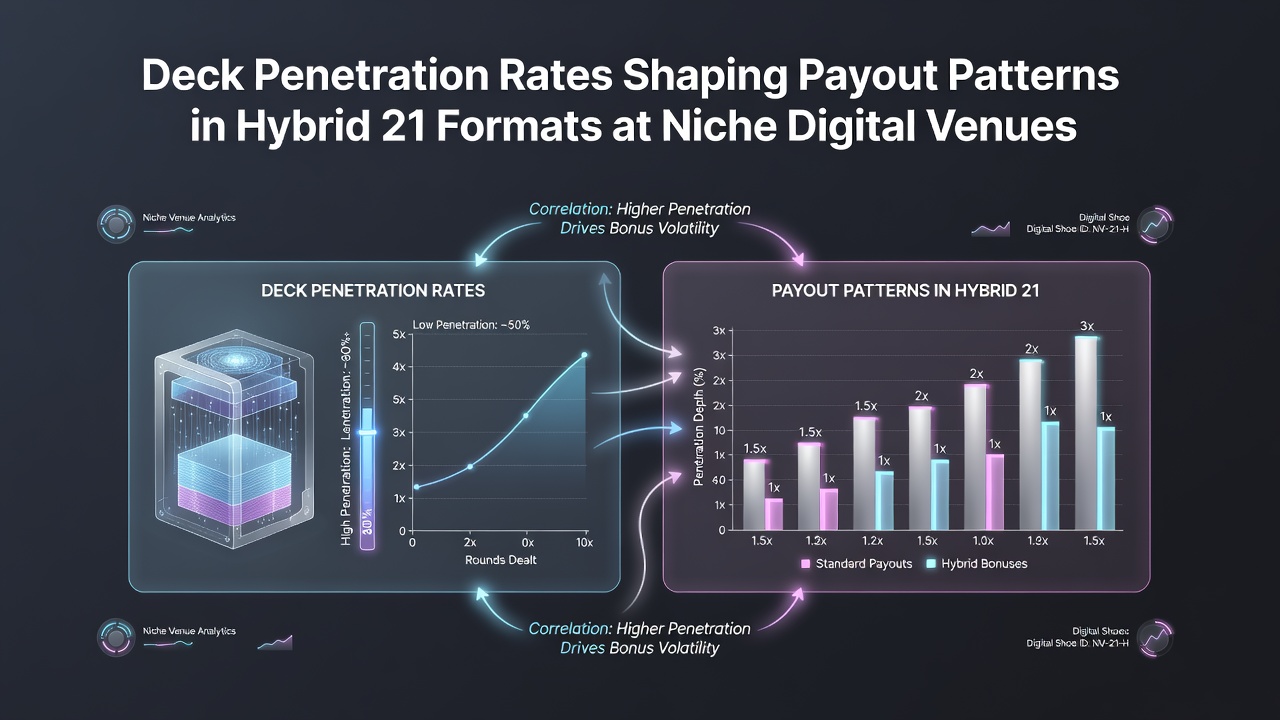
Deck penetration rates continue to influence payout patterns across hybrid 21 formats offered at niche digital venues, where operators combine elements from multiple blackjack variants into single games that appeal to targeted player segments. Researchers at gaming analytics firms track penetration levels because deeper cuts into the shoe often shift return percentages in measurable ways, particularly when rules allow for side bets or altered payout structures common in these hybrids.
Understanding Penetration in Hybrid Contexts
Hybrid 21 games blend standard blackjack mechanics with features drawn from pontoon, super 21, and wheel-based side bets, creating formats that require adjusted strategies for optimal play. Penetration refers to the percentage of cards dealt before a reshuffle occurs, and data from multiple platforms shows that rates between 60 and 80 percent correlate with specific payout frequency shifts in these combined rule sets. Observers note that lower penetration tends to stabilize house edges while higher rates introduce more variability in outcomes tied to the frequency of bonus triggers.
Data Patterns Observed Through Mid-2026
Figures compiled through August 2026 from several boutique online operators reveal that hybrid titles maintain average deck penetration around 72 percent, which aligns with payout pattern adjustments in games featuring multiple side wager options. According to records maintained by the New Jersey Division of Gaming Enforcement, venues licensed in that jurisdiction report consistent return-to-player percentages that move in tandem with penetration depth, especially when hybrid rules permit early surrender or doubled side bets. Those who've analyzed server logs across platforms find that penetration increases beyond 75 percent often coincide with elevated frequency of maximum payouts in formats that incorporate wheel mechanics alongside traditional card draws.
Studies from independent testing labs indicate that niche venues adjust shuffle points deliberately to manage volatility in hybrid 21 offerings, since players who track penetration can identify windows where certain payout clusters become more probable. What's interesting is how these adjustments differ from standard blackjack environments, where penetration serves mainly as a counting advantage marker rather than a direct payout modulator. In hybrid settings the interaction between penetration and bonus features creates layered payout curves that researchers continue to map through large datasets.
Regional Variations and Operator Practices
Operators in different jurisdictions apply distinct penetration policies that shape local payout distributions. Venues serving Canadian markets, for instance, show average penetration rates that sit slightly lower than those in European digital spaces, according to aggregated reports from the Australian Gambling Research Centre which includes cross-regional comparisons. This variation produces measurable differences in how often hybrid side bets resolve at their top tiers, because shallower cuts limit the number of high-value card combinations that trigger premium payouts.
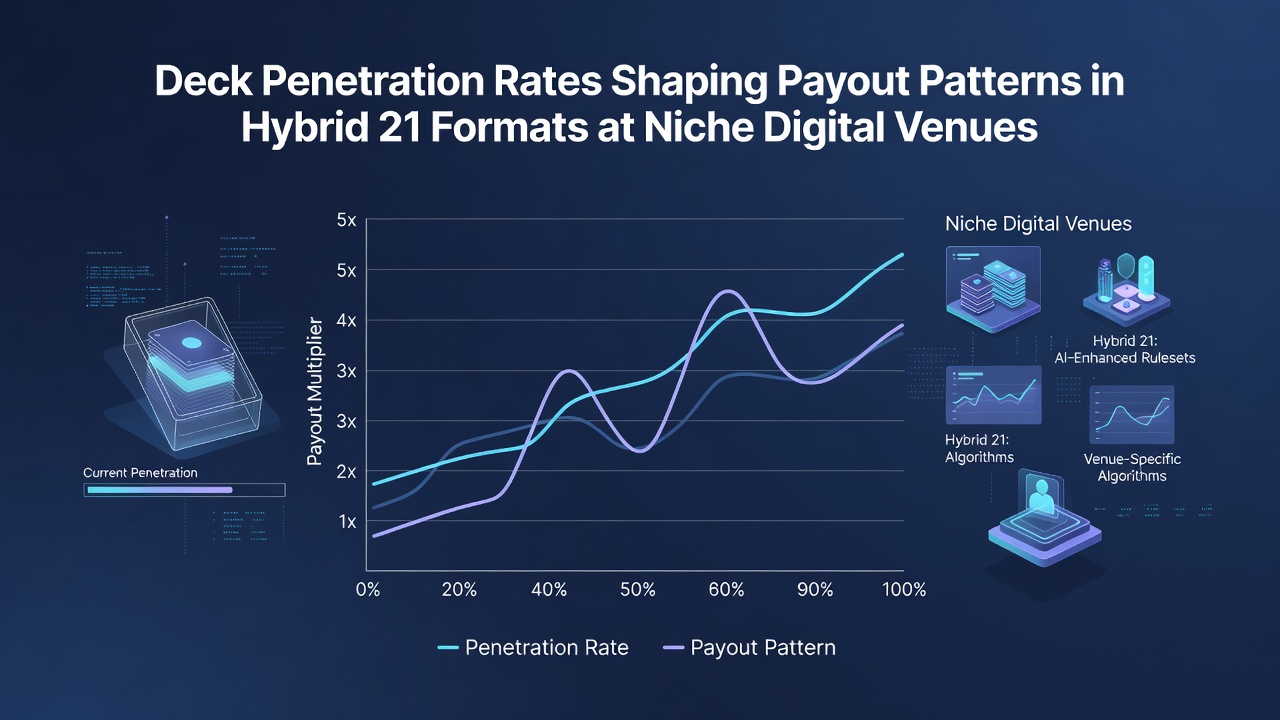
Take one dataset released in early 2026 where analysts compared two hybrid titles at the same venue, one shuffled at 65 percent penetration and another at 80 percent. The deeper penetration version displayed a 1.8 percent lift in overall return percentage driven primarily by increased frequency of combined card-and-wheel payouts. Experts have observed that such patterns hold across multiple niche sites because the underlying random number generators maintain consistent distribution once the penetration threshold is set by the operator's shuffle algorithm.
Implications for Payout Modeling
Modeling teams at smaller digital platforms use penetration as a primary variable when forecasting payout patterns for new hybrid 21 releases. Because these venues often cater to narrower player demographics, they fine-tune penetration to balance game speed against return stability, which results in distinct payout signatures compared with larger mainstream casinos. Research indicates that penetration levels directly affect the distribution tails in games that layer multiple bonus conditions, creating scenarios where certain payout events cluster more tightly around specific shoe depths.
Those who've examined longitudinal data note that August 2026 updates to several platform algorithms coincided with minor penetration recalibrations that flattened some of the more extreme payout spikes previously observed in hybrid formats. This recalibration process relies on statistical sampling of dealt hands rather than arbitrary settings, ensuring that payout patterns remain within regulatory tolerances while preserving the appeal of the hybrid mechanics.
Conclusion
Penetration rates function as a structural variable that shapes payout patterns in hybrid 21 formats at niche digital venues through measurable interactions with rule combinations and bonus triggers. Data gathered across jurisdictions demonstrates consistent correlations between penetration depth and return distributions, with operators continuing to refine shuffle thresholds in response to observed patterns. As platforms evolve their hybrid offerings, penetration metrics remain central to maintaining balanced payout behaviors that align with both player expectations and compliance requirements.