Interwoven Mechanics: Face-Up 21 Meets Match Play 21 and Super 21 in Select Online Arenas
Written by Taylor Schmidt · Aug 25, 2026
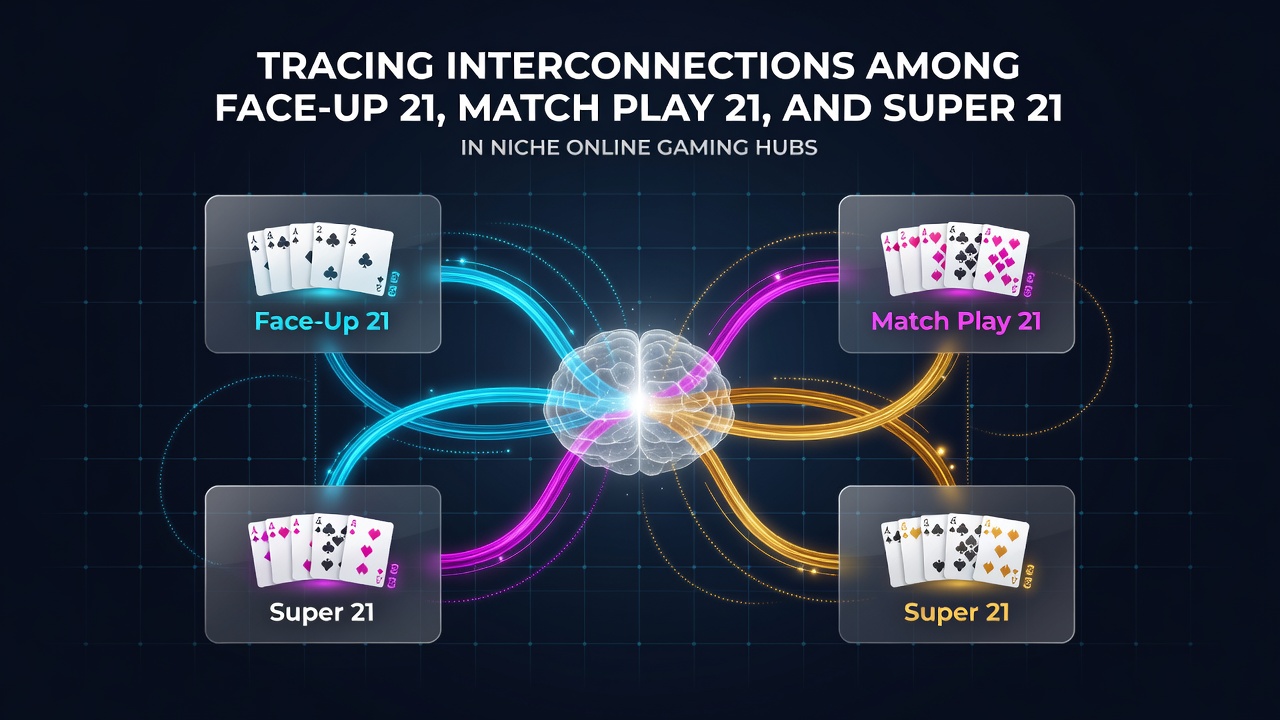
Interwoven Mechanics: Face-Up 21 Meets Match Play 21 and Super 21 in Select Online Arenas
Face-Up 21, Match Play 21, and Super 21 share core blackjack foundations yet diverge through targeted rule adjustments that create distinct player experiences in boutique online settings, and observers note these adjustments often appear together in specialized platforms because operators can reuse similar software frameworks while offering varied payout structures.
Shared Foundations Across Variants
Each game begins with standard deck compositions and dealer hit-or-stand protocols, but Face-Up 21 reveals both dealer cards immediately after the initial deal, Match Play 21 incorporates a separate even-money side wager that pays when the player hand beats the dealer by a set margin, while Super 21 awards bonus multipliers for hands totaling exactly 21 with specific card combinations, and researchers have documented how these features allow platforms to segment audiences without rebuilding entire game engines.
Data from industry reports indicate that platforms hosting all three variants simultaneously report higher session retention rates because players migrate between tables after short losing streaks, and this pattern emerged clearly in analyses covering activity through mid-2026.
Rule Overlaps That Enable Cross-Play
Soft 17 dealer rules appear consistently across the three games in many niche hubs, yet payout tables differ enough to reward distinct strategies, for instance Face-Up 21 often limits doubling to certain totals while Super 21 expands double-down options on any two cards, and Match Play 21 ties its bonus wager directly to the main hand outcome, creating tactical decisions that influence both bets simultaneously.
One study revealed that players familiar with Face-Up 21 mechanics transfer quickly to Super 21 because both reduce information asymmetry compared with traditional blackjack, whereas Match Play 21 demands additional calculation around the side bet threshold, and this transferability explains why certain platforms bundle the titles under unified loyalty programs.
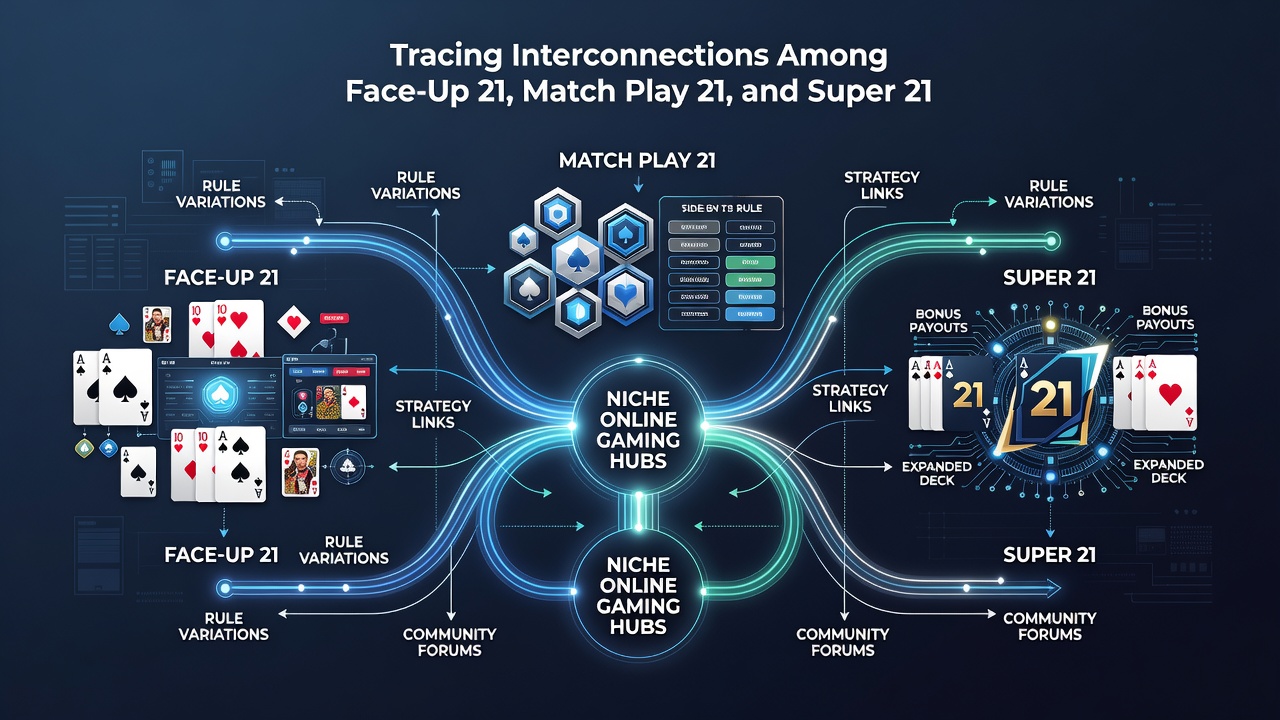
Platform Integration Patterns in 2026
Throughout August 2026 several regional operators updated their game libraries to include simultaneous access to all three variants within single lobbies, and figures from the New Jersey Division of Gaming Enforcement show increased licensing applications for bundled blackjack packages during that period, suggesting operators view the trio as complementary rather than competing products.
Those who've examined player data note that Match Play 21 sessions frequently precede Face-Up 21 play because the side bet mechanic encourages conservative main-hand decisions that align with Face-Up 21's visible dealer information, while Super 21 draws users seeking higher volatility after periods spent on the lower-variance Match Play tables.
Strategic Connections and Player Migration
Card counting techniques developed for Face-Up 21 carry partial effectiveness into Super 21 because both games expose more information than standard formats, yet the bonus structures in Super 21 require adjusted indices that account for multiplier triggers, and experts have observed players adapting these indices within a single session when switching between the two games on the same platform.
Match Play 21 introduces an extra layer where optimal side-bet sizing depends on the main hand edge, and this dependency creates a bridge to Super 21's multiplier calculations because both require real-time assessment of multiple payout paths, according to research compiled by the University of Nevada, Las Vegas gaming studies department.
Regulatory Context and Future Trajectories
Regulatory updates scheduled for late 2026 in several North American jurisdictions emphasize responsible gaming disclosures that apply uniformly across blackjack variants, and these requirements encourage operators to standardize return-to-player reporting for Face-Up 21, Match Play 21, and Super 21 within the same compliance documents, which further incentivizes their co-location in niche online environments.
Evidence suggests that platforms already offering the three titles together encounter fewer approval delays because reviewers can evaluate interconnected risk profiles rather than isolated game mechanics.
Conclusion
Face-Up 21, Match Play 21, and Super 21 maintain separate identities through specific rule tweaks while sharing enough mechanical DNA to support unified platform strategies, and this interconnection pattern continues to shape how boutique online gaming hubs organize their blackjack offerings as of August 2026.