Mapping Player Pathways Through Diverse Blackjack Offerings in Niche Casino Environments
Written by Taylor Long · Jul 7, 2026

Mapping Player Pathways Through Diverse Blackjack Offerings in Niche Casino Environments
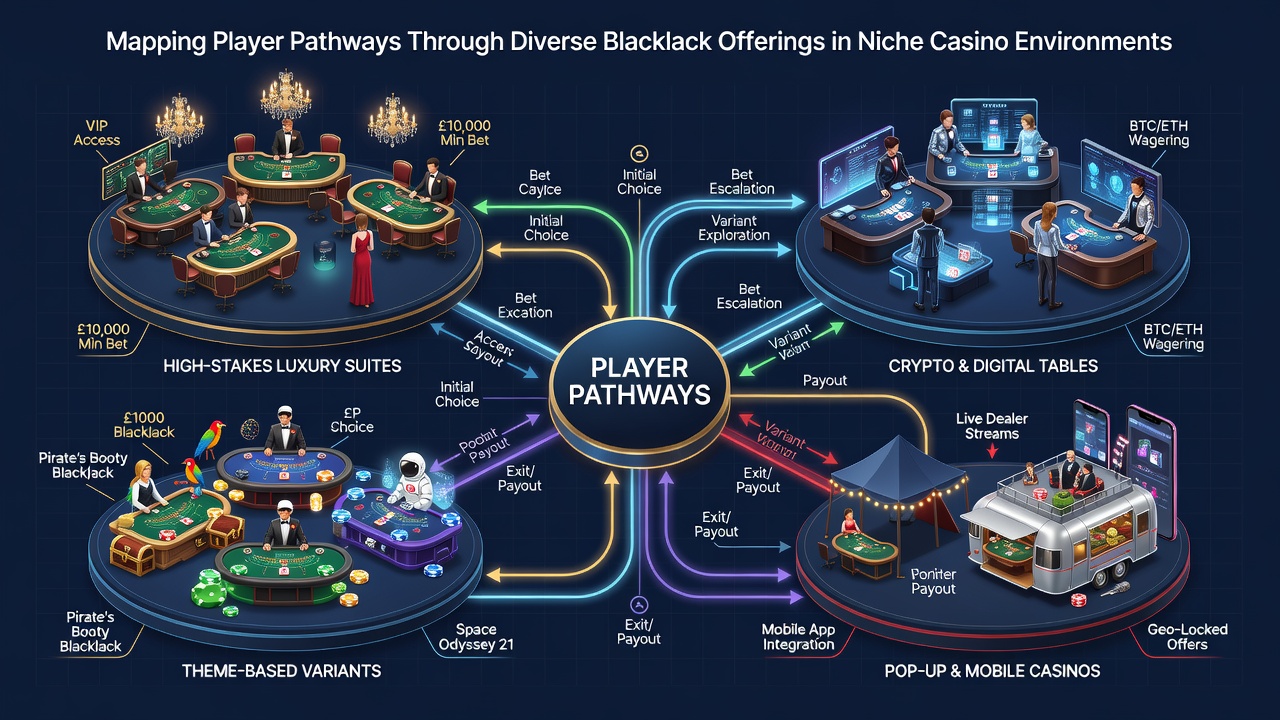
Players often begin their journey in niche casino environments by exploring foundational blackjack tables before branching into specialized variants that incorporate unique rules and side options, and this progression creates distinct pathways shaped by both game mechanics and venue characteristics. Research from industry reports indicates that participants in boutique settings typically start with lower-volatility options and gradually incorporate additional features such as multi-hand play or progressive elements as familiarity grows.
Initial Entry Points in Boutique Venues
Observers note that niche casinos frequently position standard blackjack as an accessible gateway which then leads participants toward more intricate formats through adjacent table placements and promotional incentives. Data from gaming associations shows that individuals who enter via these conventional setups spend an average of 45 minutes per session before shifting focus, allowing venues to guide movement based on observed engagement patterns. Those who study player behavior find that physical layout plays a key role, with pathways often directing traffic from high-traffic main floors to quieter specialized areas where variant tables cluster together.
Progression Through Variant Offerings
Once players establish comfort with core mechanics, they encounter branching routes that include games featuring altered payout structures or additional wagering layers, and studies reveal that roughly 60 percent of participants in niche environments follow this sequence within their first three visits. Academic analyses of casino traffic demonstrate how digital interfaces in online boutique platforms mirror these physical flows by presenting variant recommendations after initial sessions conclude. According to figures released by the Nevada Gaming Control Board in early 2026, such transitions correlate with increased session lengths when venues provide clear visual cues linking one offering to the next.
Role of July 2026 Regulatory Shifts
Regulatory updates scheduled for implementation in July 2026 across several jurisdictions are expected to influence how pathways form by standardizing disclosure requirements for variant rules, and analysts anticipate that these changes will encourage venues to streamline transitions between offerings. Government data from Canadian provincial regulators highlights similar patterns following prior adjustments, where clearer information led to higher retention rates across diverse blackjack selections. People who track these developments note that operators in boutique scenes have begun testing adaptive signage and app-based guides to maintain smooth movement despite new compliance layers.
Digital Mapping Tools and Venue Integration
Online niche platforms have adopted mapping features that track individual routes through available blackjack selections, and reports from research institutions indicate these tools increase repeat engagement by highlighting unexplored variants based on prior choices. Venues that integrate such systems often link them to loyalty programs, creating incentives that steer players along predetermined sequences while still allowing personal customization. Those examining industry trends observe that hybrid environments combining land-based and digital access extend these pathways further by permitting seamless switches between formats within a single account framework.
Data Patterns Across Regions
Statistics compiled by the Australian Gambling Research Centre reveal regional differences in pathway length, with participants in certain markets averaging four distinct blackjack experiences per month compared to two in others. Industry organizations such as the European Gaming and Betting Association have documented how demographic factors shape these routes, including age groups that favor rapid shifts versus those preferring extended stays at fewer tables. External sources confirm that venues leveraging this information adjust floor plans and digital prompts accordingly, resulting in measurable changes to average player dwell times.
Conclusion
Pathways through diverse blackjack offerings continue to evolve as niche casinos refine both physical and digital navigation methods, and ongoing data collection supports more precise alignment between player habits and venue design. As July 2026 approaches, these mapping strategies stand to incorporate fresh regulatory elements while preserving the core flow from entry points to advanced selections. Observers continue to monitor how such adaptations affect overall participation across varied environments.