Strategic Overlaps in Wheel-Driven Mechanics and Classic 21 Play Within Specialized Online Venues
Written by Taylor Schmidt · Jun 23, 2026
Strategic Overlaps in Wheel-Driven Mechanics and Classic 21 Play Within Specialized Online Venues
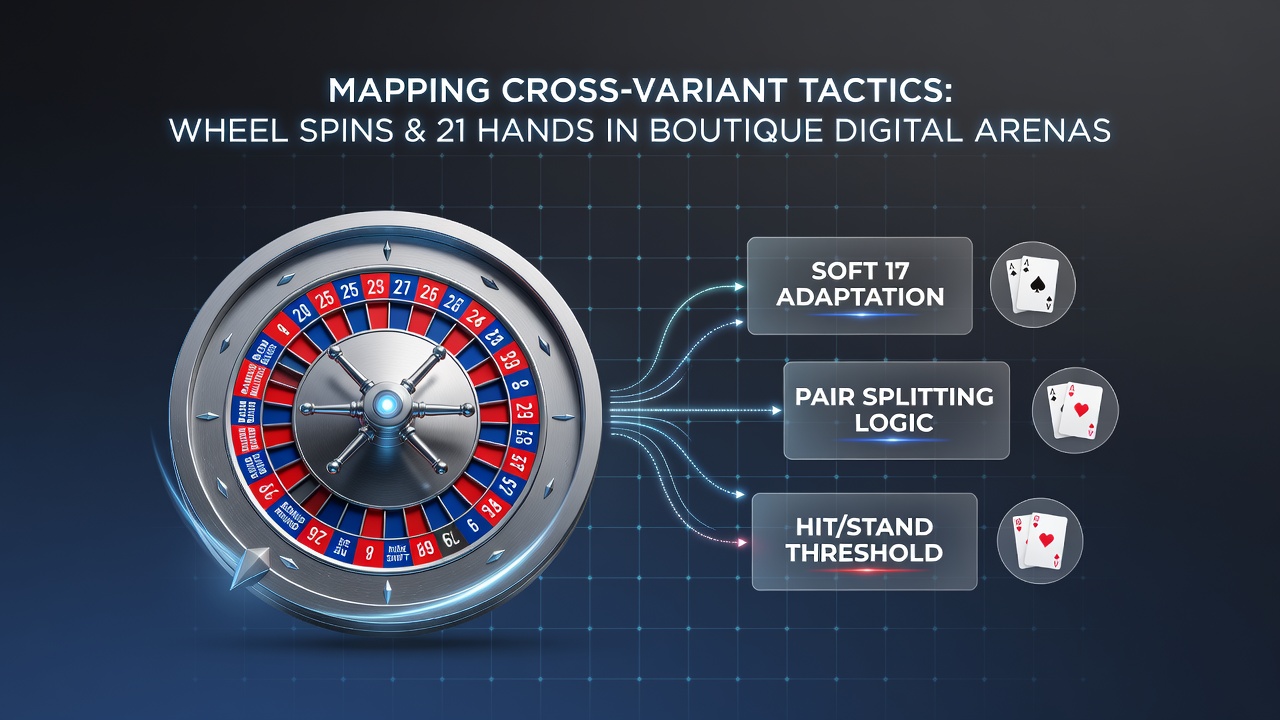
Digital platforms that combine wheel elements with standard 21 rules create opportunities for players to transfer decision frameworks across formats, and data from multiple gaming jurisdictions shows these overlaps appear consistently in boutique environments where custom variants operate side by side.
Core Mechanics That Enable Tactic Transfer
Wheel spins introduce random multipliers or bonus triggers that interact with hand totals, while traditional 21 decisions focus on hit, stand, split, and double actions based on dealer upcards; researchers at academic institutions have documented how probability tables for basic strategy remain relevant when wheel outcomes modify payout structures rather than replace them entirely.
Players often apply the same risk thresholds they use in card-based rounds to wheel sequences because both formats require evaluation of remaining deck composition or spin distribution against fixed house edges, and regulatory filings from the Pennsylvania Gaming Control Board confirm that hybrid tables in licensed online spaces maintain these dual-evaluation points as standard features.
Decision Mapping Across Formats
Basic strategy charts designed for multi-deck blackjack retain utility in wheel-integrated games when the wheel serves as a side resolution rather than the primary outcome driver, since hand totals still determine whether a player should draw or hold before the wheel activates; industry reports indicate that operators in boutique digital arenas program these sequences to preserve the 0.5 percent house edge range common in standard 21 play.
Card counting techniques adapted from traditional tables find limited application once wheel spins enter the sequence because the random element resets some dependencies, yet observers note that tracking high-value cards remains relevant for the initial deal phase before any wheel resolution occurs, and this partial continuity appears in session data collected across European online operators.
Positioning and Timing Considerations
Timing bets around wheel activation points mirrors the moment a player decides to double down in classic 21, because both actions commit additional stake at a specific probability threshold; studies from research groups focused on gaming mathematics reveal that optimal entry points align when the remaining card distribution favors certain totals and the wheel segments offer comparable return profiles.

Position sizing strategies carry across because bankroll allocation models developed for standard hands account for variance spikes introduced by wheel multipliers, and those models continue to function when the wheel replaces only the payout calculation step without altering the underlying hand resolution.
Regulatory Context and Platform Developments
By June 2026 several boutique platforms are scheduled to introduce updated interfaces that display real-time probability overlays for both wheel segments and card combinations, allowing direct visual mapping during play; filings submitted to the New Jersey Division of Gaming Enforcement describe these tools as extensions of existing responsible gaming features rather than new game types.
Industry associations have compiled usage statistics showing that participants who apply consistent decision logic across formats maintain session lengths comparable to those recorded in single-variant environments, which suggests the transferred tactics do not introduce measurable deviations in average play duration.
Conclusion
Cross-variant tactics emerge naturally when wheel mechanics supplement rather than replace core 21 resolution steps, and available data from regulatory bodies plus academic analyses confirm that probability frameworks and position sizing principles transfer with minimal adjustment; operators continue to refine interfaces that support these shared evaluation points while adhering to jurisdictional requirements for transparency in hybrid formats.