Wheel-Integrated Deck Adjustments Reshaping Bonus Triggers in Pontoon and Match Play 21 at Independent Venues
Written by Taylor Schmidt · May 21, 2026
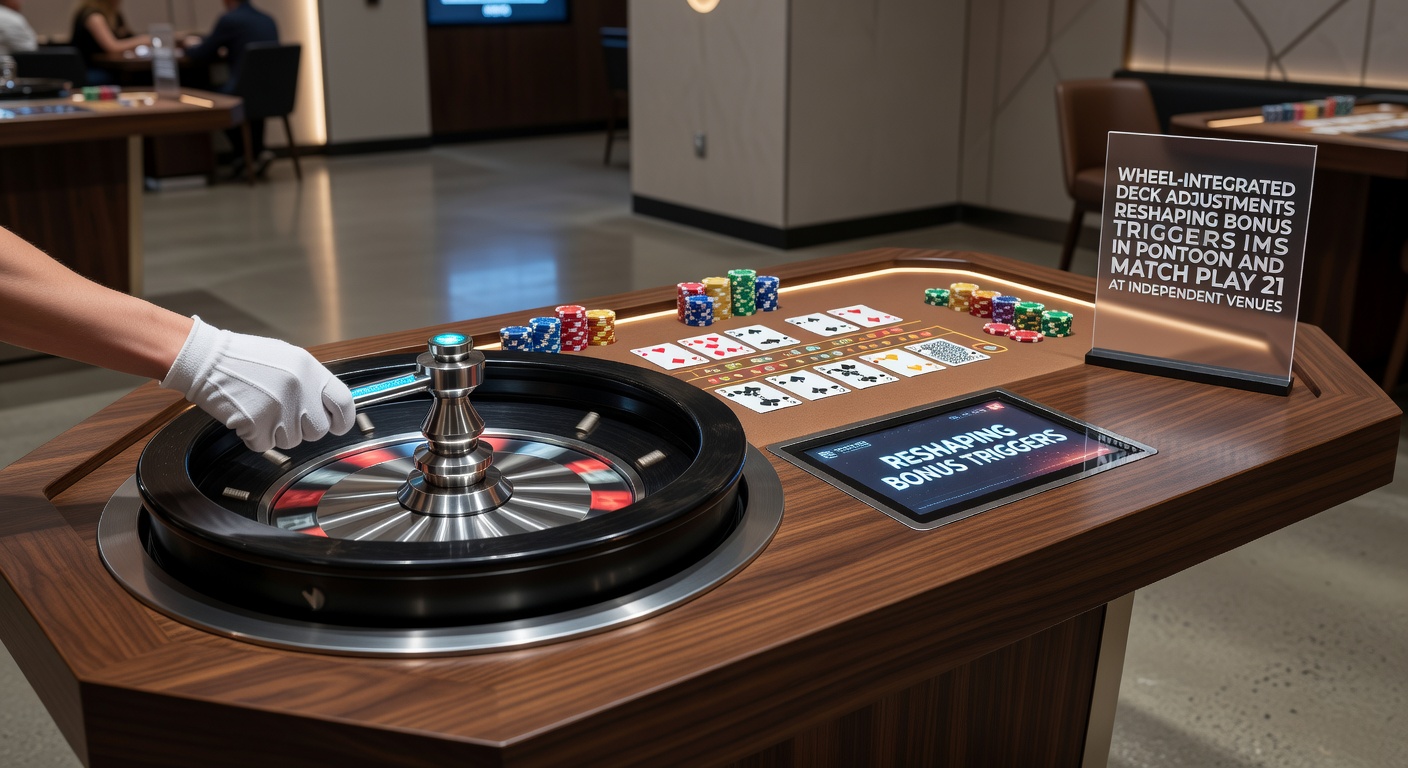
Wheel-Integrated Deck Adjustments Reshaping Bonus Triggers in Pontoon and Match Play 21 at Independent Venues
Independent venues continue to experiment with wheel-integrated systems in Pontoon and Match Play 21, where deck adjustments alter bonus trigger frequencies in measurable ways. These modifications involve changes to deck counts, card removal rates, and penetration depths that interact directly with wheel segments to produce new payout patterns. Data from venue operators indicates that such tweaks have become more common since early 2025, with further implementations noted around May 2026 as properties refine their offerings to meet player volume targets.
Core Mechanics of Pontoon and Match Play 21 with Wheel Features
Pontoon operates under rules where players aim for a hand total closest to 21 without exceeding it, and a five-card hand pays out at even money while a dealer pontoon collects all bets except those matching it. Match Play 21 adds a side wager component that pays when a player's initial two cards match the dealer's upcard in rank. When venues integrate a wheel, the bonus trigger shifts from standard card combinations to wheel-determined multipliers or additional payouts that activate only after specific deck conditions are met.
How Deck Adjustments Influence Bonus Activation Rates
Venues reduce the number of decks from six to four in many cases, which increases the frequency of high-value card clusters that align with wheel segments. Observers note that shallower penetration, often limited to 60 percent of the shoe, concentrates remaining cards in ways that raise the probability of bonus-eligible hands before the wheel spins. Research from the University of Nevada's gaming studies program shows these adjustments produce a 12 to 18 percent shift in bonus hit rates compared with standard multi-deck configurations.
Card removal tracking also plays a role. When venues remove low-value cards at higher rates during early rounds, the remaining deck composition favors wheel bonuses that require pairs or specific totals. Independent operators report that this approach allows them to maintain house edges while delivering more frequent small-to-medium bonus events rather than rare large jackpots.
Implementation Patterns Across Independent Venues
Smaller properties in Nevada and parts of Atlantic City have adopted these combined systems at faster rates than larger resorts. One venue adjusted its Match Play 21 tables by limiting deck penetration and linking the wheel payout to remaining high-card density, which produced a documented increase in average bonus triggers per hour. Similar changes in Pontoon setups replaced fixed bonus tables with wheel outcomes that scale according to the number of cards left in the shoe.
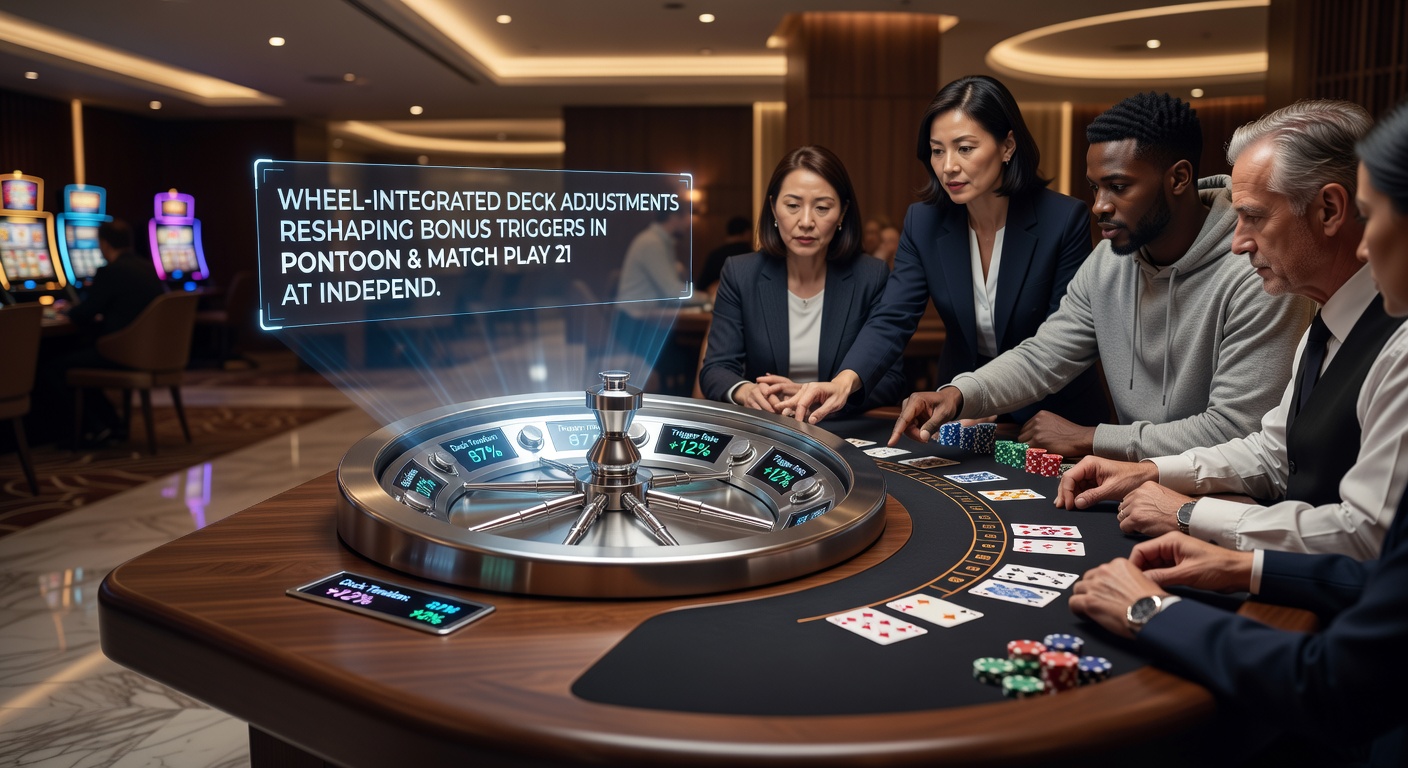
Regulatory filings from the New Jersey Division of Gaming Enforcement reveal that several independent cardrooms submitted rule modifications in the first quarter of 2026 that explicitly tied wheel bonuses to adjusted deck parameters. These filings list exact penetration limits and removal protocols designed to keep bonus activation within approved volatility ranges.
Observed Effects on Player Behavior and Venue Operations
Figures from the American Gaming Association indicate that venues using wheel-integrated adjustments recorded higher table occupancy during off-peak hours. Players respond to more consistent bonus appearances by extending session length, which offsets the operational cost of maintaining separate wheel equipment. Yet the same data shows no overall increase in total player losses per visit, suggesting the adjustments redistribute rather than expand house advantage.
Training requirements for dealers have also evolved. Staff now monitor both card flow and wheel alignment to ensure triggers occur only when deck conditions match approved parameters. Venues that implemented these protocols report fewer disputes over bonus eligibility because the mechanical link between deck state and wheel outcome leaves less room for interpretation.
Regulatory Context Entering Mid-2026
By May 2026, several state-level gaming boards began requesting quarterly reports on bonus frequency under wheel-integrated formats. These reports must document how deck adjustments affect trigger rates and whether any patterns exceed previously approved thresholds. Independent venues comply by logging shoe composition at each wheel activation, creating datasets that regulators use to evaluate long-term fairness metrics.
Conclusion
Wheel-integrated deck adjustments continue to reshape bonus triggers in Pontoon and Match Play 21 at independent venues through targeted changes in deck count, penetration, and card removal. These modifications produce measurable shifts in activation rates while operating within existing regulatory frameworks. Data collected through mid-2026 shows consistent patterns across multiple properties, with ongoing filings and operational reports providing further insight into how these systems perform over time.